
Why Countertop Thickness Matters
When planning a kitchen or bathroom renovation, most homeowners spend time choosing the perfect color and material for their countertops. But there is another decision that is just as important: the thickness. The average countertop thickness you select affects everything from the structural integrity of your surfaces to the overall aesthetic of the room.
The two most common options are 2cm (about 0.75 inches) and 3cm (about 1.25 inches). The right choice depends on your style preferences, how you use the space, and what kind of daily wear and tear the countertop will face. In this guide, we will walk you through the differences so you can make a confident decision for your home.
Standard Countertop Thickness: What You Need to Know
Understanding the standard countertop depth and thickness options available is the first step toward making the right selection. Here is a closer look at the two primary choices:
2cm Countertops (Approximately 0.75 Inches)
Two-centimeter slabs offer a slimmer, lighter profile. They are an excellent choice for bathrooms, decorative surfaces, accent walls, and areas that do not endure heavy daily use. Their refined appearance gives a sleek, modern feel to any space. Because of their lighter weight, they can also be easier and more cost-effective to install in certain applications.
3cm Countertops (Approximately 1.25 Inches)
Three-centimeter slabs are thicker, stronger, and built to handle the demands of high-traffic areas. This is the standard quartz countertop thickness for kitchens and is the most popular choice among homeowners. The added mass delivers a more substantial, luxurious appearance and superior durability for everyday cooking, meal prep, and entertaining.
Kitchen Countertop Thickness: Durability Meets Design
For kitchens, 3cm is the recommended countertop thickness and the industry standard. Kitchens are the hardest-working rooms in most homes. Between hot pots, sharp knives, heavy appliances, and daily spills, your countertop needs to be tough enough to handle it all.
A 3cm countertop provides outstanding resistance to impact and everyday wear. It also delivers that substantial, high-end look that makes a kitchen feel complete. The thicker slab sits confidently on cabinetry without requiring additional support, creating clean sight lines and a polished finish.
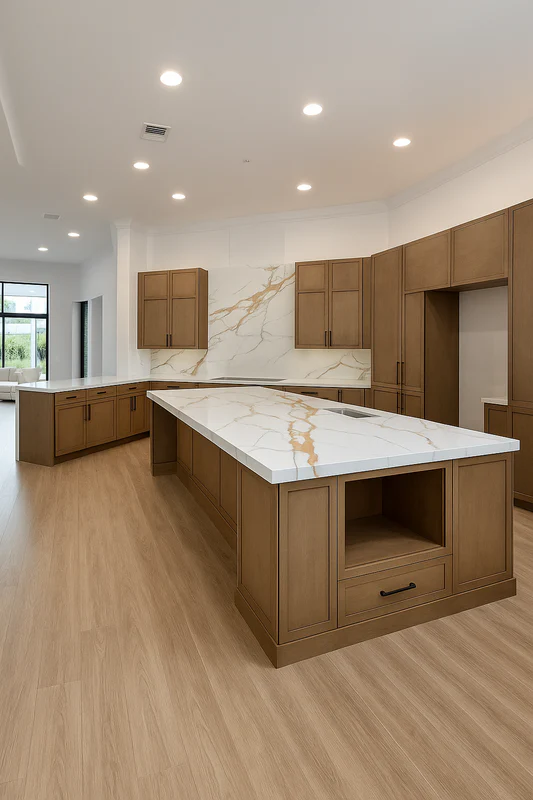
That said, 2cm countertops can work beautifully in kitchens when paired with a plywood underlayment for structural reinforcement. This combination is especially popular for modern kitchen islands where homeowners want a thinner, more contemporary profile. The underlayment sits beneath the slab and is completely hidden, giving you the sleek look you want with the strength you need.
Explore our kitchen and bath portfolio to see how different thicknesses look in real installations.
Bathroom Countertop Thickness
Bathrooms are a different story. They generally see lighter use than kitchens, which means a 2cm countertop is often the ideal choice. The thinner profile complements the more refined, spa-like aesthetic that many homeowners want in their bathrooms. It works particularly well with undermount sinks and floating vanity designs.
However, if you are going for a bold, luxury look in a master bathroom, a 3cm slab can make a powerful statement. The extra thickness adds visual weight and gives the vanity a more substantial, high-end presence. It all comes down to the style you are trying to achieve.
Countertop Thickness by Material
The material you choose also plays a role in how different thicknesses perform. Here is a breakdown of the most popular options:
Quartz
Quartz is one of the most versatile and popular countertop materials available. It is engineered to be incredibly durable, non-porous, and virtually maintenance-free. Quartz performs exceptionally well in both 2cm and 3cm thicknesses, making it an excellent choice for kitchens, bathrooms, and everything in between. It resists staining, scratching, and bacterial growth without ever needing to be sealed.
Granite
Granite is a naturally strong and scratch-resistant stone that has been a homeowner favorite for decades. Its timeless beauty and long-term value make it a reliable investment. Granite countertops are available in both thickness options and are especially popular in 3cm for kitchen applications where durability is a top priority.
Marble
Marble is the gold standard of elegance. Its unique veining and luminous surface create a look that is difficult to replicate. However, marble is softer and more porous than quartz or granite, which means it requires regular sealing and more careful maintenance. Marble is best suited for low-traffic areas like bathrooms, bar tops, or decorative surfaces where its beauty can shine without the risk of heavy wear.
Visit our project gallery to see quartz, granite, and marble installations in homes throughout the area.
Edge Profiles: Enhancing the Look of Your Countertop
The edge profile you select can dramatically change the appearance of your countertop and even create the illusion of a different thickness. Here are the most popular edge options:
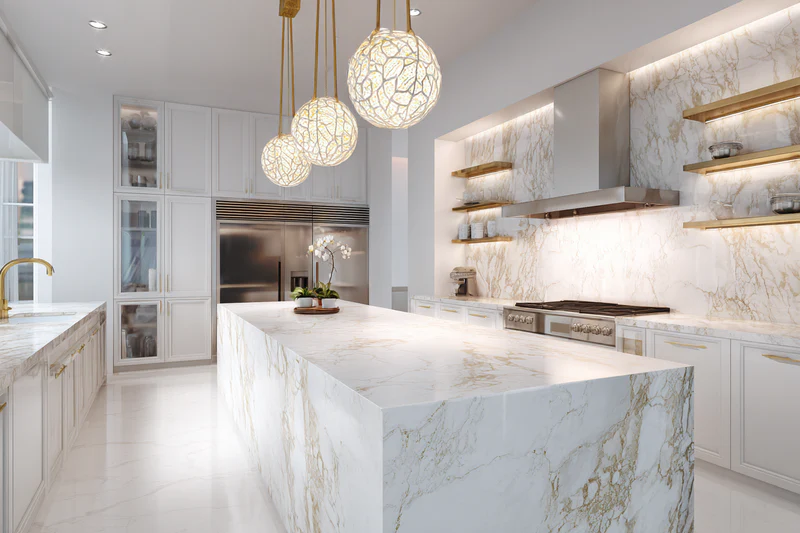
- Mitered Edge: Two slabs are joined at a 45-degree angle to create the illusion of a much thicker countertop. This is a stunning option for waterfall islands and modern kitchens.
- Eased Edge: A simple, slightly softened edge that maintains clean, minimalist lines. It is one of the most popular choices for contemporary spaces.
- Beveled Edge: Features an angled cut along the top edge, adding subtle dimension and a touch of detail without being overly ornate.
- Bullnose Edge: A fully rounded edge that creates a soft, smooth profile. This classic look works well in traditional and transitional kitchens and is less prone to chipping.
- Ogee Edge: An elegant S-shaped curve that adds a sense of luxury and sophistication. This decorative profile is often seen in high-end kitchens and formal spaces.
- Flat Polish Edge: A clean, squared-off edge with a polished finish. It delivers a sharp, contemporary look that pairs beautifully with modern cabinetry.
- Half Bullnose Edge: Rounded on the top with a flat bottom, offering a softer look than an eased edge while maintaining a streamlined profile.
Choosing the Right Thickness: Key Considerations
When deciding between 2cm and 3cm countertops, keep these factors in mind:
- Usage: Think about how the surface will be used. High-traffic kitchens benefit from the strength of 3cm. Bathrooms and decorative areas work well with 2cm.
- Budget: Thinner slabs generally cost less for both material and installation. If budget is a primary concern, 2cm with underlayment can be a smart compromise in the kitchen.
- Aesthetics: Consider the look you want. A thick, substantial countertop makes a bold statement, while a thinner profile offers a sleek, modern feel.
- Installation: Thicker slabs are heavier and may require additional support from your cabinetry. Make sure your cabinets and structure can handle the weight of your chosen thickness.
Finding the Perfect Fit for Your Home
Whether you are renovating your kitchen, updating a bathroom, or building from the ground up, countertop thickness is a decision that deserves careful thought. The right choice balances form and function, giving you surfaces that look beautiful and perform flawlessly for years to come.
At Griffin Quartz, we help homeowners navigate every detail of their countertop projects, from material selection and thickness to edge profiles and installation. Our team is here to make sure you get exactly the result you are looking for.
Ready to get started? Contact us today for a free consultation and let us help you find the perfect countertop for your space.
Frequently Asked Questions
What is the standard thickness for kitchen countertops?
The standard thickness for kitchen countertops is 3cm (approximately 1.25 inches). This thickness provides superior durability, supports heavy use, and delivers the substantial, luxurious appearance most homeowners prefer in their kitchens.
Can I use 2cm countertops in my kitchen?
Yes, you can use 2cm countertops in your kitchen, but they typically require a plywood underlayment for added structural support. This is a popular choice for modern kitchen islands where a sleeker, thinner profile is desired.
Which thickness is better for bathroom vanities?
For bathroom vanities, 2cm thickness is generally recommended. Bathrooms experience lighter daily use compared to kitchens, so the thinner profile works well while also offering a more refined and elegant look for the space.
Do edge profiles affect countertop durability?
Edge profiles are mostly decorative, but they can have a minor effect on durability. Rounded profiles like bullnose and eased edges are less prone to chipping compared to sharp, angular profiles. If durability is a top concern, choosing a softer edge profile is a smart decision.
Need Help Choosing the Right Thickness?
Our experts will guide you through thickness, material, and edge profile options for your kitchen or bath. Let us help you make the perfect choice for your space and lifestyle.
Get a Free Consultation